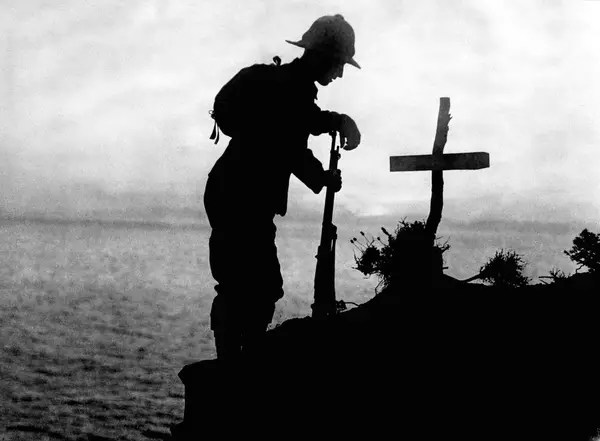
“The world must be made safe for democracy. Its peace must be planted upon the tested foundations of political liberty.” President Woodrow Wilson.
Wilson understood the national, ethnic, and historic conflicts in Europe. Often, citizens were only exposed to the propaganda of authoritarian governments. He saw democracy as a way to overcome European divisions.
The International Labour Organisation (ILO), like the League of Nations, was created by the Treaty of Versailles. It added the vital contribution to peace of social justice, including freedom of association. Countries that could peacefully resolve conflicts nationally were less likely to wage war on their neighbours.
However, when Wilson returned home, he applied different standards. From a family in the South that supported slavery and the Confederacy, he re-segregated the federal government reversing progress made during Reconstruction.
In addition, several bombings produced a massive reaction from Wilson’s Attorney General, A Mitchell Palmer, working with J. Edgar Hoover. People who were or suspected of being anarchists, socialists or Communists were deported, often without any evidence. They were the enemy within and not subject to normal judicial and human rights protections.
Today’s nationalism
George Orwell wrote:
“Nationalism is not to be confused with patriotism. Both words are normally used in so vague a way that any definition is liable to be challenged, but one must draw a distinction between them, since two different and even opposing ideas are involved. By ‘patriotism’ I mean devotion to a particular place and a particular way of life, which one believes to be the best in the world but has no wish to force on other people. Patriotism is of its nature defensive, both militarily and culturally. Nationalism, on the other hand, is inseparable from the desire for power. The abiding purpose of every nationalist is to secure more power and more prestige, not for himself but for the nation or other unit in which he has chosen to sink his own individuality.”
If we think of nationalism as being not just about the nation, but other units like ethnicity, class, and religion, the US of 2024 looks more like Europe prior to WWI than the US from FDR through LBJ. In those post-War decades there was great progress for workers, for society and, eventually, for civil rights. We were moving towards greater equality, not greater injustice.
It was only later that the market and its actors were placed on the altar and worshipped by the Right, the Left, and the Centre. There was a stifling consensus to contract out governance by the elected to powerful corporate and financial interests with no mandate from the people. It was a self-inflicted wound to democracy and governance.
Power has steadily been concentrating. This has generated outrage at elites. That outrage is manipulated, in part, through social media, to deliver benefits for those very elites. Rule of law and freedom suffers in the process.
Benito Mussolini, who everybody would agree was a fascist, said:
“Democracy is talking itself to death. The people do not know what they want; they do not know what is the best for them. There is too much foolishness, too much lost motion. I have stopped the talk and the nonsense. I am a man of action. Democracy is beautiful in theory; in practice it is a fallacy.”
Concentration of wealth and power means that politicians are chasing the same billionaires. Cosying up to Wall Street makes one look moderate and responsible.
To quote Mussolini again, “Fascism should more appropriately be called Corporatism because it is a merger of state and corporate power”. Enter Elon Musk, a combination of Extreme Right, Extreme wealth, social media and, increasingly, a man of the State who is, at the same time, feeding off of the State..
I have no solutions to propose other than to suggest taking a more radical approach centred on economic and social progress. We should not be dragged into illusory or imagined culture wars. That, combined with organising in workplaces and neighbourhoods, might be part of the way to a decent future.
To make a fundamental shift requires common values. But, that means that we also need to find some common truth.


 Views of a trade unionist
Leave a comment